Key takeaways
- A Sri Lanka cooking class in Ella cooks a genuinely different menu from the coast. Less coconut milk, more greens, root vegetables and slow-cooked dhal.
- Ella sits at around 1,000 metres, so the kitchen is comfortable rather than punishing. This is the one part of the island where a four-hour cooking session does not leave you soaked.
- Most Ella classes run in the afternoon, which fits neatly after a morning walk and before dinner.
- Prices track the rest of the island. Expect low thousands of rupees per person for a village group class including the meal.
- Book it for a rest day, not a travel day. The Kandy to Ella train arrives tired and late often enough that a same-day class is a gamble.
Why the food changes when you climb
Sri Lanka is small enough that people assume the food is uniform across it. It is not, and the gap between a coastal kitchen and a hill country one is the clearest example.
Ella sits in the highlands among tea estates, at an altitude where coconut palms thin out and vegetable plots take over. Cabbage, leeks, carrots, beetroot, winged beans and several leafy greens that never make it down to the coast in good condition. Coconut still shows up, because it always does, but it is not the backbone of every pot the way it is in Weligama.
The other difference is temperature, and it matters more than it sounds. A village class on the south coast in March is a genuinely sweaty four hours next to a wood fire. In Ella you get mountain air coming through the open side of the kitchen, and cooking stays pleasant right through the afternoon.
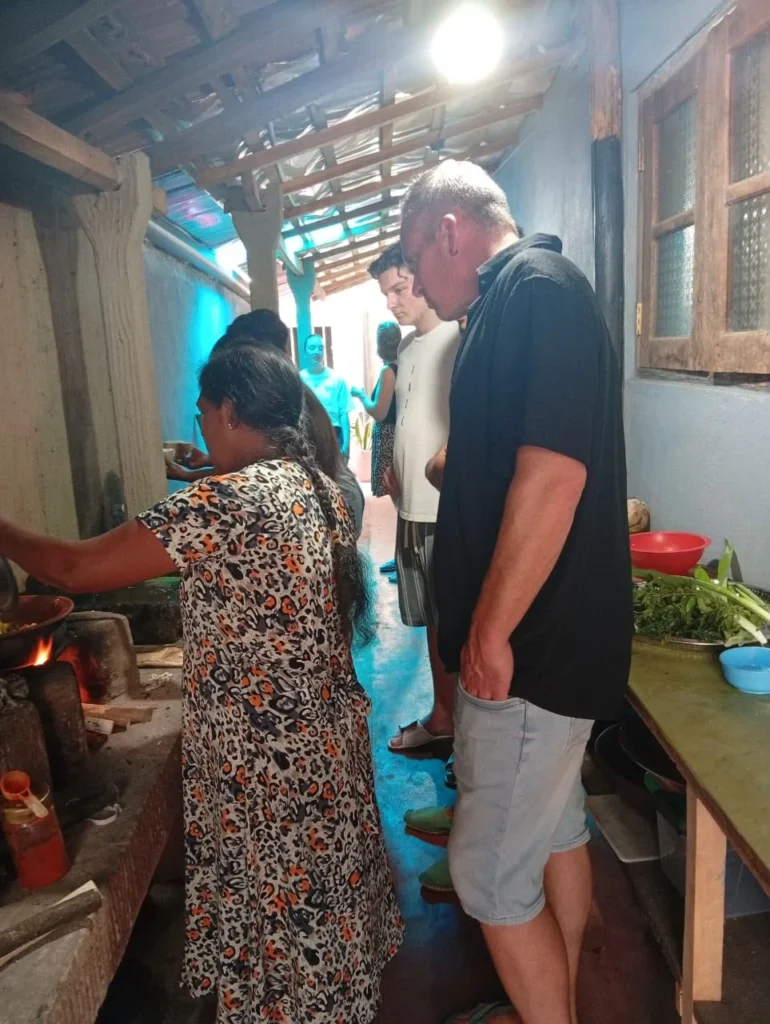
What you cook in a hill country kitchen
The structure is the same as anywhere on the island. You are building a rice and curry plate, which means five to ten separate small dishes timed to land hot together. The contents are what shift.
Expect some version of:
A leafy green mallum. Shredded greens tossed with grated coconut, lime, chilli and onion, barely cooked. It is the dish coastal menus do least often and hill kitchens do best.
Beetroot curry. Deep purple, faintly sweet, and one of the dishes travellers most often ask for the recipe to.
A slow dhal. Highland kitchens tend to cook parippu longer and looser than the coast.
Winged bean or green bean curry, depending on the plot.
Pol roti or godamba roti, slapped out by hand on a flat pan.
Red rice, and occasionally a highland variety you will not see in a hotel buffet.
Cinnamon and cardamom go in whole, and you will watch someone judge the quantity by eye and get it right. Ceylon cinnamon is worth buying while you are up there, since the hill country is close to where the good stuff is processed.
Fitting the class into an Ella itinerary
Ella is a small town where most people stay two or three nights and fill the days with the same shortlist: the Nine Arch Bridge, Little Adam’s Peak, Ella Rock, a tea factory, and the train ride in or out. That shortlist is genuinely good, and it also means most travellers spend Ella walking.
An afternoon cooking class is the correct counterweight. Walk in the morning while it is cool, cook in the afternoon, eat at dusk.
What does not work is booking a class for your arrival day. The Kandy to Ella train is one of the great rail journeys anywhere and it is also frequently late, sometimes by hours. Give it a day.
If you are building the wider route, our nine-day Sri Lanka itinerary shows where Ella sits relative to everything else, and the three-week version has room for two food days rather than one.
Tea, and why it belongs in this conversation
You cannot spend a day in Ella without tea entering it. The town is surrounded by estates, and tea production in Sri Lanka is the reason the hill country looks the way it does, right down to the terraced slopes and the colonial-era rail line you arrived on.
Several households will finish a class with plain tea rather than dessert, brewed strong and drunk with far more sugar than you are expecting. Try it their way before you adjust it.
If you want the estate visit as well, do it as a separate morning. Pairing a factory tour and a cooking class into one day sounds efficient and produces two rushed experiences.
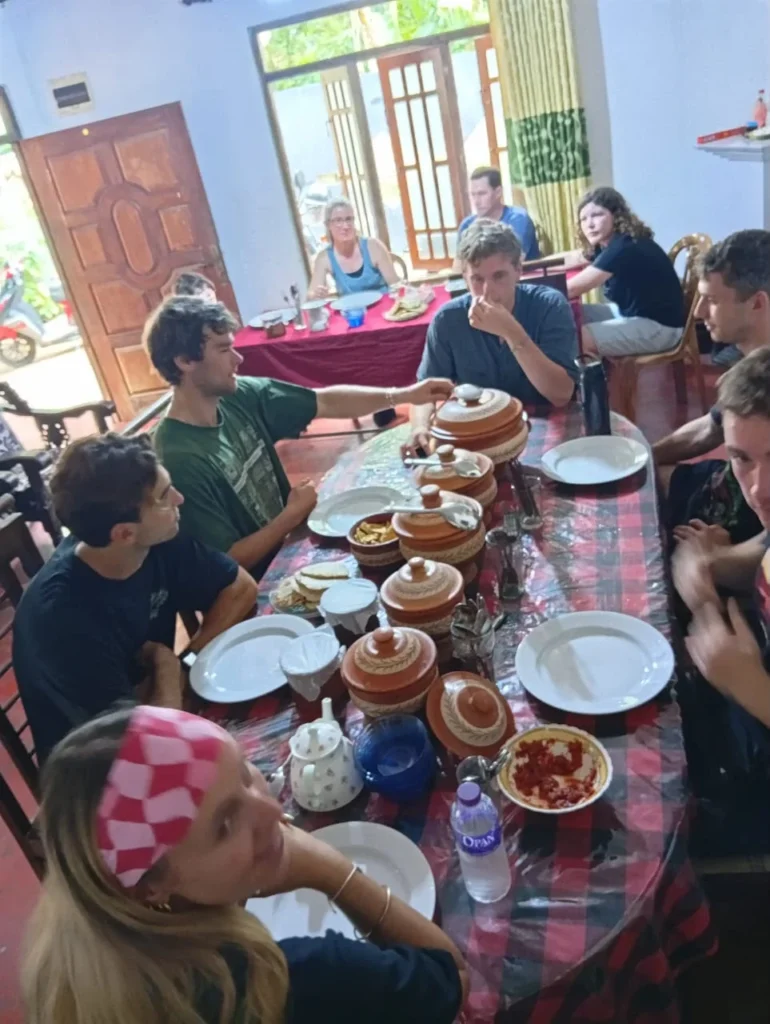
Picking a class in Ella without getting a demonstration
Ella has a lot of listings for a town its size, and quality varies more than on the south coast because turnover is higher. Three things to check before you pay.
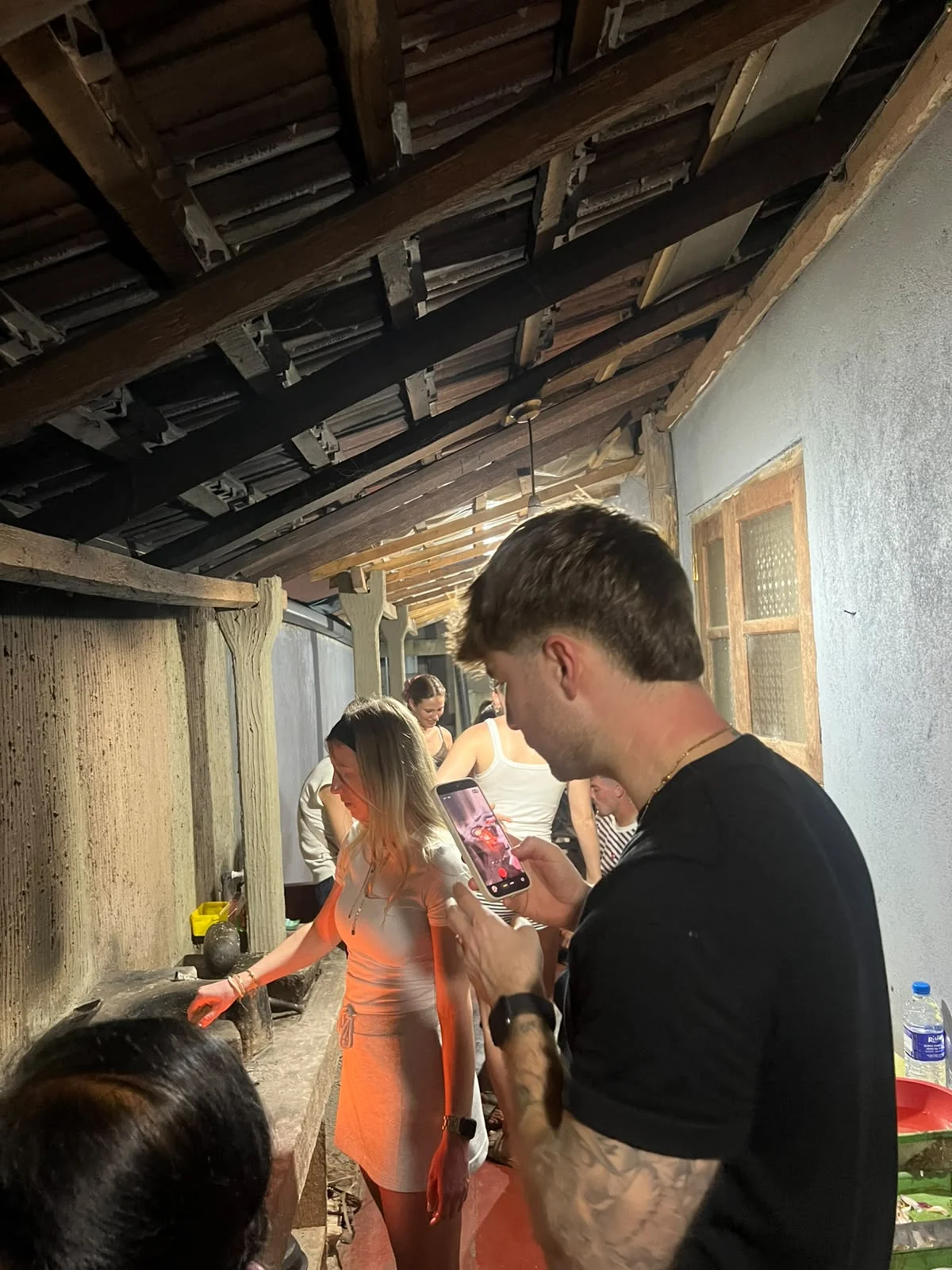
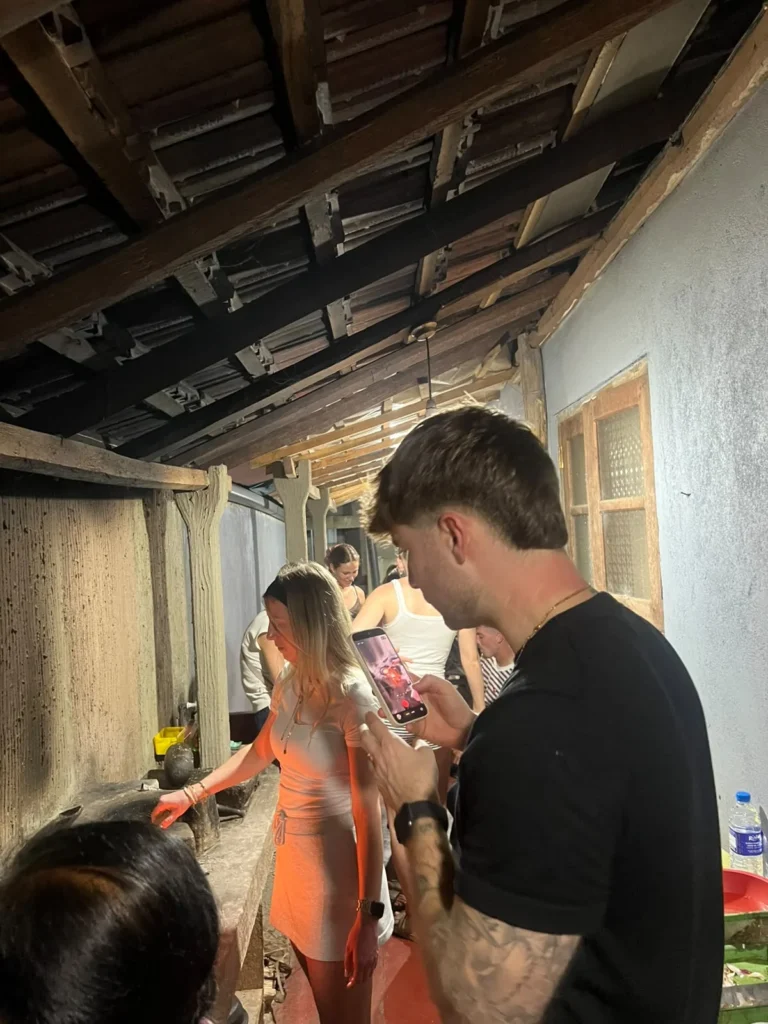
Look at the photographs rather than the description. A clay tile roof, open rafters, a wood fire and mismatched pots mean a family kitchen. A tiled wall and a gas hob mean a demonstration room attached to a guesthouse. Both exist in Ella, and the listing text for each reads about the same.
Ask how many dishes. Fewer than five and you are being shown a recipe, not taught a meal.
Ask whether you eat with the family. This is the single clearest signal. If the answer is that food is served to you afterwards, it is a restaurant with a lesson attached.
Our full guide to choosing a cooking class in Sri Lanka goes through this in more detail, and it applies just as well in the hills as on the coast.
When to come
Ella’s weather does not follow the coastal monsoon pattern neatly. The drier stretch runs roughly January to March, with a second reasonable window around July and August. The rest of the year brings mist and afternoon rain, which frankly suits the place.
Bring a layer. Ella at night is cool enough that visitors arriving from Mirissa are regularly caught out. Lonely Planet and the UK government’s travel advice pages are both worth a look for current seasonal and practical detail before you lock dates.
Frequently asked questions
Is there a good cooking class in Ella, Sri Lanka?
Yes. Ella has several village and homestay classes, and the hill country menu differs from the coast, with more leafy greens, beetroot and root vegetables and less heavy coconut milk.
How much does a cooking class in Ella cost?
Roughly the same as elsewhere on the island. Village group classes run in the low thousands of rupees per person including the meal. Guesthouse and hotel classes cost more.
How long is a cooking class in Ella?
Usually three to four hours including eating. Most run in the afternoon and finish around dusk.
Is an Ella cooking class better than a coastal one?
Different rather than better. Ella is cooler to cook in and the vegetables are more varied. The coast gives you seafood and a stronger coconut-driven menu.
Do I need to book ahead in Ella?
Two days is sensible. Ella books out fast in the January to March window, and households shop for your menu the morning of the class.
Can I do a cooking class on the day I arrive by train?
Not advisable. The Kandy to Ella train runs late often enough that you risk missing the session entirely.
Is the food very spicy in the hill country?
Comparable to the rest of the island, and every household will dial the chilli down if you ask when booking.